Essential Hardware for Overhead & Underground Distribution Lines: C & E-Type Copper Sleeves and Crimp Installation

Electrical reliability across overhead grids and underground vaults depends directly on mechanical joint integrity. In power distribution networks, C-type and E-type copper compression sleeves serve as the foundational hardware for tap-offs, dead-ends, and grounding terminations.
C-type and E-type copper sleeves provide permanent, low-resistance connections for primary conductors by maintaining uniform contact pressure under heavy mechanical vibration and thermal cycling. Selecting the correct sleeve geometry and applying precise hydraulic crimp dies ensures joints withstand extreme fault currents without hot spots or premature line drop.
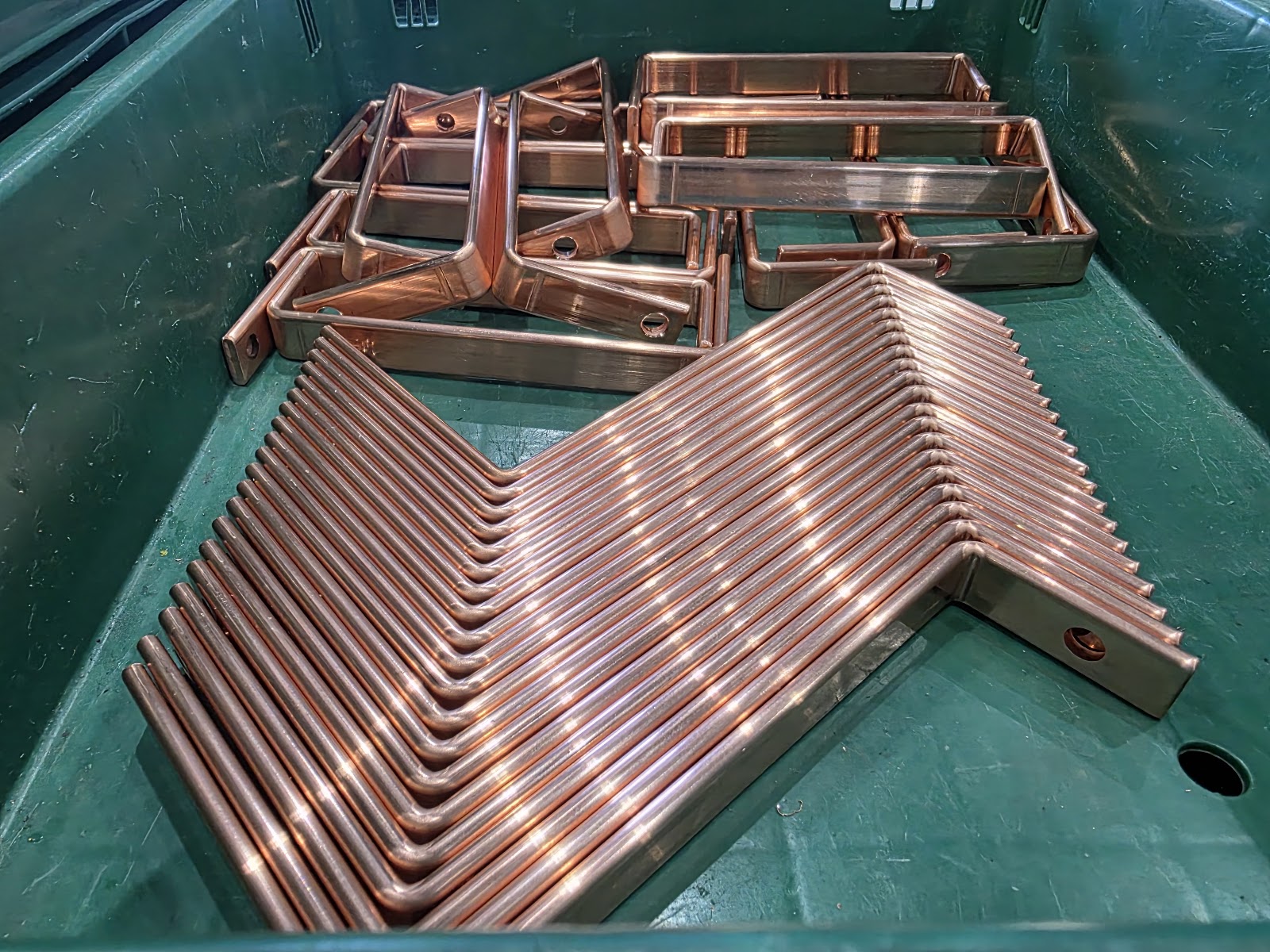
- C-Type Sleeves: Open-mouth design allows rapid tap-offs on uninterrupted continuous main lines.
- E-Type Sleeves: Figure-8 or oval dual-channel profile ensures symmetrical pressure distribution across parallel conductors.
- Installation Standard: Minimum 99.9% electrolytic tough pitch (ETP) copper with matched hydraulic hexagonal or indent dies prevents contact failure.
What are C and E-Type Copper Sleeves?
Compression sleeves are seamless, high-conductivity fittings engineered to splice, tap, or ground power conductors. Manufactured from high-purity non-ferrous copper profiles—often sourced through specialized manufacturing matching precision copper extrusion standards—these sleeves undergo annealing to allow smooth mechanical deformation without cracking during heavy compression.

While standard mechanical bolted connectors can loosen over time due to thermal expansion, compression sleeves create a cold-welded mass. The high conductivity of copper matches or exceeds the continuous current-carrying capacity of the connected conductor, reducing power loss across the grid.
C-Type vs. E-Type Sleeves: Engineering Differences and Use Cases
The choice between C-type and E-type configurations comes down to line continuity, conductor geometry, and installation space.


| Feature | C-Type Copper Sleeve | E-Type Copper Sleeve |
|---|---|---|
| Cross-Section Profile | Open “C” channel | Dual-cavity oval or “E” / Figure-8 profile |
| Main Line Handling | Taps into live or continuous lines without cutting | Requires inserting conductor ends through closed channels |
| Primary Application | Overhead branch taps, surge arrester ground leads | Parallel feeder splices, underground transformer jumpers |
| Mechanical Holding Force | Moderate to high tensile holding | High symmetrical compression and tension |
| Die Compatibility | Indent or modified-hex compression dies | Standard hexagonal or dual-circumferential dies |
For systems that interface directly with switching apparatus or high-voltage sub-panels, integrating compatible terminations like those explored in our guide to copper tube terminal selection ensures consistent conductivity across the entire junction chain.
Step-by-Step Hydraulic Crimp Installation Process
A loose crimp leads to localized thermal runaway, while an over-crimped connector risks severing stranded conductor wires. Following a standardized installation protocol guarantees distribution reliability.
- Conductor Preparation: Strip insulation cleanly without nicking individual copper strands. Use a stainless steel wire brush to remove the surface oxide layer immediately before assembly.
- Compound Application: Coat the stripped conductor and internal sleeve surface with an approved synthetic antioxidant compound to block moisture ingress.
- Hardware Matching: Verify that the die code stamped on the copper sleeve matches the hydraulic crimp tool die index exactly.
- Progressive Compression: Place the sleeve in the tool and compress starting from the center outward (or following the arrow marks on the sleeve) to distribute metal displacement evenly.
- Inspection and Flash Removal: Check crimp bite depth using a go/no-go caliper gauge, and wipe off extruded compound or flash burrs before applying heat-shrink or mastic insulation tape.
- Conductor diameter matched to sleeve inside dimensions within nominal tolerances.
- Sleeve is free of micro-fissures, deep scratches, and grease contamination.
- Hydraulic crimper calibrated to standard tonnage output (typically 12 to 15 tons for distribution gauges).
- Adequate overlapping clearance maintained between adjacent crimp bites.
Common Mistakes in Overhead and Underground Line Crimping
Even premium copper sleeves fail prematurely if installed using improper practices. In overhead lines, insufficient crimping pressure allows wind-induced aeolian vibration to back the wire out of the joint, creating arcing faults.
In underground installations, the most critical risk is water vapor ingress. Because underground conduits experience continuous humidity, omitting antioxidant paste causes accelerated galvanic corrosion between individual copper strands. Furthermore, choosing the wrong metal compatibility—such as mixing dissimilar bare metals without proper transition barriers—can cause galvanic degradation, a factor often evaluated when comparing aluminum vs. copper busbars and connectors.
Frequently Asked Questions
Can C-type copper sleeves be reused after unbolting or cutting?
No. Compression sleeves undergo permanent plastic deformation during the initial hydraulic crimp. Attempting to pry open or re-crimp a used sleeve compromises structural integrity and results in high electrical resistance.
How do I determine the correct die size for a specific copper sleeve?
Each manufactured C-type or E-type sleeve features stamped markings indicating the conductor range, part catalog number, and manufacturer die index code. Always align this die index with the corresponding color or number on your hydraulic die set.
Are copper sleeves suitable for connecting aluminum distribution cables?
Bare copper sleeves should not be crimped directly onto bare aluminum conductors due to galvanic corrosion. Bi-metallic sleeves or specialized tin-plated transitional connectors with friction-welded barriers must be used for copper-to-aluminum joints.

Leave your inquiry and our team will get back to you shortly.
📩 COSTAL Contact us