Precision Extrusion of High-Purity Copper Rods, Tubes & Sheets: Non-Ferrous Metal Standards for Power & Electronics

Modern power distribution and advanced electronics demand flawless electrical efficiency and structural integrity. Selecting the right non-ferrous conductor profile directly determines your system’s thermal performance, mechanical stability, and energy loss over decades of operation.
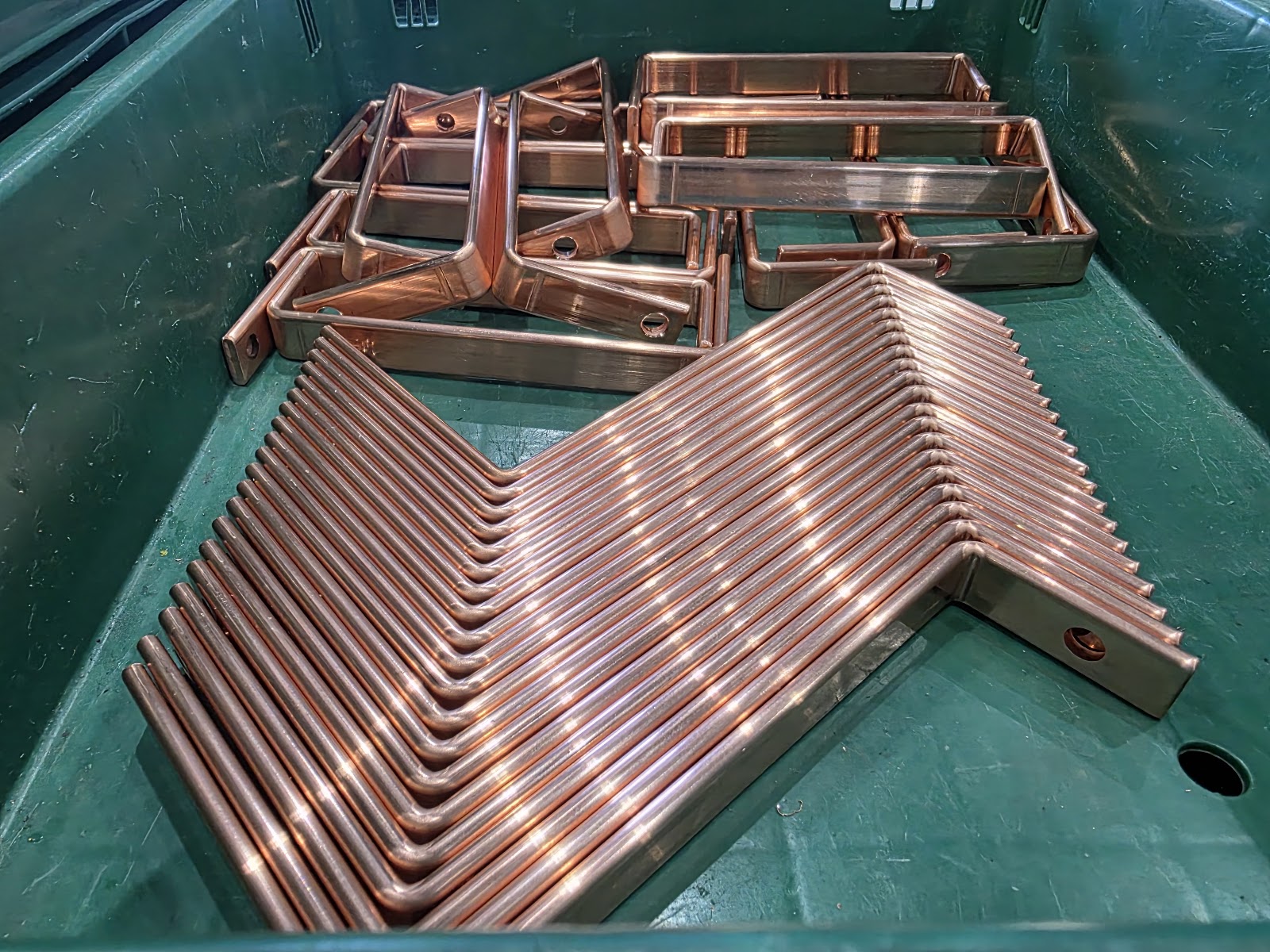
Precision extrusion of high-purity copper rods, tubes, and sheets ensures consistent electrical conductivity exceeding 100% IACS, tight dimensional tolerances, and optimal grain structure essential for high-stress power and electronic applications.
Material Grade: Oxygen-Free Electronic (OFE / C10100) and Electrolytic Tough Pitch (ETP / C11000) serve as industry benchmarks.
Form Factor Versatility: Extruded rods, seamless tubes, and flat sheets target specific current densities and cooling mechanisms.
Quality Compliance: Strict adherence to ASTM, EN, and JIS standards guarantees predictable thermal and electrical ratings.
What Makes Precision Extrusion Crucial for High-Purity Copper?
Extrusion is not merely a shaping process; it is a metallurgical refinement. By forcing heated billets through precision-machined dies under high pressure, extrusion aligns the internal crystalline grain boundaries of copper along the direction of electrical current flow.
This grain refinement minimizes micro-voids, eliminates internal stresses, and reduces electron scattering. When manufacturing profiles like a copper busbar, precision extrusion provides superior edge conditions, flat contact surfaces, and consistent cross-sectional areas that prevent localized hot spots during peak load events.
When selecting profiles for specialized switchgear or power conversion, reviewing our Complete Copper Busbar Machining Guide: Selecting Round, Square, and Custom Profiles can help clarify mechanical constraints before tooling begins.

Copper Material Grades: Which Standard Fits Your Electrical Application?
Not all high-purity coppers perform identically under extreme operating conditions. Selecting between standard electrolytic grades and oxygen-free variants depends on the operating temperature, joining method, and environmental exposure.
Grade (UNS / JIS) | Purity (% Cu) | Conductivity (% IACS) | Primary Strengths | Best Use Cases |
|---|---|---|---|---|
C10100 (OFE) | ≥ 99.99% | 101% – 102% | Immune to hydrogen embrittlement; ultra-low volatile impurities | Semiconductors, vacuum interrupters, high-vacuum electronics |
C10200 (OF) | ≥ 99.95% | ≥ 100% | Excellent brazeability and high ductility | Precision waveguides, high-power tube terminals, microwave devices |
C11000 (ETP) | ≥ 99.90% | ≥ 100% | Superior overall conductivity at optimal production cost | Standard busbars, power distribution panels, switchgear rods |
C12200 (DHP) | ≥ 99.90% | 85% – 90% | Phosphorus deoxidized; exceptional forming and corrosion resistance | Liquid cooling circuits, heat pipes, condenser tubing |
Engineers weighing conductivity against overall assembly mass should also evaluate our detailed analysis on Aluminum vs. Copper Busbars: Material Optimization for Maximized Electrical Conductivity and Weight Reduction to establish baseline thermal limits.
Extruded Product Forms and Engineering Trade-Offs
Choosing the correct extruded profile shapes how current distributes through skin effect and how efficiently heat radiates away from conductors.
Provide maximum mechanical strength, high short-circuit withstand capability, and straightforward thread machining for structural high-voltage connections.
Ideal for AC high-frequency lines where skin effect concentrates current on outer layers, and for carrying liquid coolant directly through the conductor core.
Offer large contact areas for bolting, optimal thermal dissipation into ambient air or heat sinks, and simple multi-layer stacking.
For custom power electronics, hollow profiles often resolve thermal bottlenecks where standard ambient air convection falls short.
How Do You Choose Between Extruded Copper Rods, Tubes, and Sheets?

Use the following decision matrix to match your application requirements with the correct extruded profile and copper grade.
Operational Requirement | Recommended Profile | Recommended Grade | Engineering Rationale |
|---|---|---|---|
High-frequency AC (> 1 kHz) or active fluid cooling | Extruded Tube | C10200 / C12200 | Reduces skin-effect losses while enabling internal liquid refrigerant passage. |
Switchgear main power trunks & DC links | Extruded Sheet / Flat Bar | C11000 (ETP) | Maximizes joint overlap area and facilitates clean bolt clamping. |
High mechanical clamping force & disconnect lugs | Extruded Round / Hex Rod | C11000 / C10100 | Resists torsional stress and provides structural stability under fault currents. |
Vacuum chamber or high-temperature brazing | Custom Profile / Sheet | C10100 (OFE) | Prevents internal micro-cracking caused by hydrogen reaction at elevated temperatures. |
Verify IACS conductivity rating via eddy current testing certificates.
Specify temper designation (e.g., Soft Annealed O60 vs. Hard Drawn H04) for bending requirements.
Confirm dimensional tolerance standards (ASTM B187 for busbars, ASTM B75 for tubes).
Determine surface treatment needs, such as electro-tin or silver plating, to prevent joint oxidation.
Frequently Asked Questions
Why is OFE copper preferred over ETP copper for vacuum applications?
ETP copper contains trace oxygen in the form of cuprous oxide. When heated in a hydrogen-rich atmosphere or brazed at high temperatures, this oxygen reacts with hydrogen to form steam pockets, causing internal embrittlement. OFE copper has virtually zero oxygen (≤ 0.0005%), eliminating this risk completely.
How does extrusion temper affect the bendability of copper busbars?
Soft-annealed (O-temper) copper provides maximum ductility, allowing tight 90-degree bends without cracking, but offers lower mechanical stiffness. Half-hard (H02) or hard-drawn (H04) tempers maintain dimensional rigidity under short-circuit forces but require larger bend radii to avoid surface edge tears.
What standard tolerances apply to precision-extruded copper profiles?
Standard architectural and electrical extrusions comply with ASTM B187 / B221 standards. Precision extrusion facilities can achieve tighter width and thickness tolerances within ±0.05 mm, ensuring flush mating across bolted electrical joints.

Leave your inquiry and our team will get back to you shortly.
📩 COSTAL Contact us